
Dialog Lensa International Collaboration PSBK x NorthSite Contemporary Arts
The Conversations That Stayed
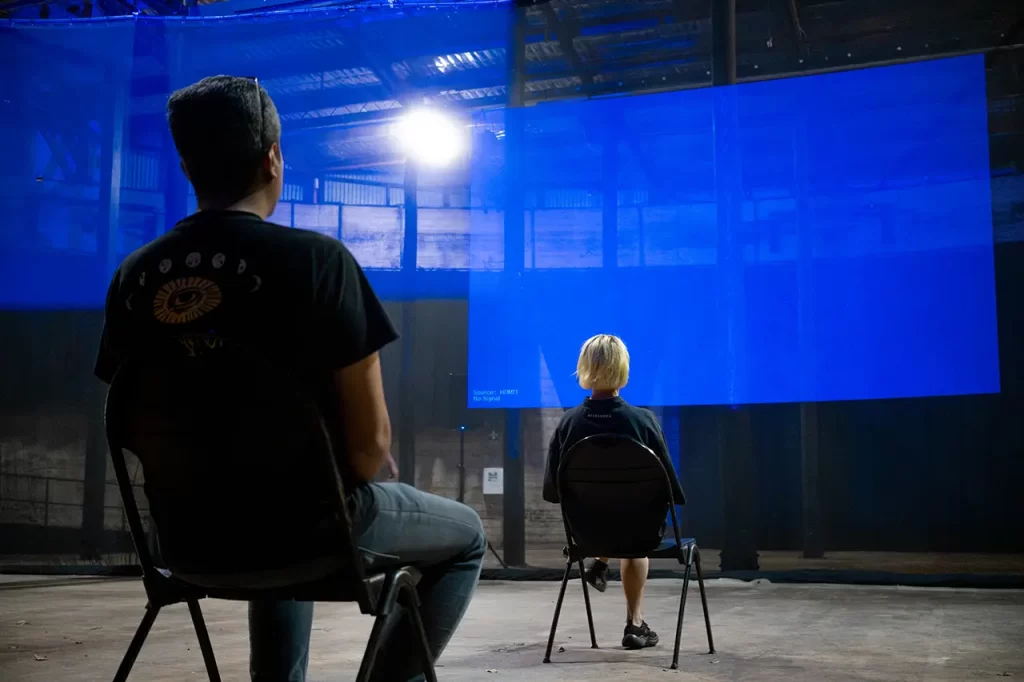
BTS Tanks Documentation, Photographer – Vickram Sombu
Through Dialog Lensa, PSBK (ID) and NorthSite Contemporary Arts (AU) committed to foster cultural bridges that connect communities, perspectives, and creative practices across geographical and cultural boundaries.
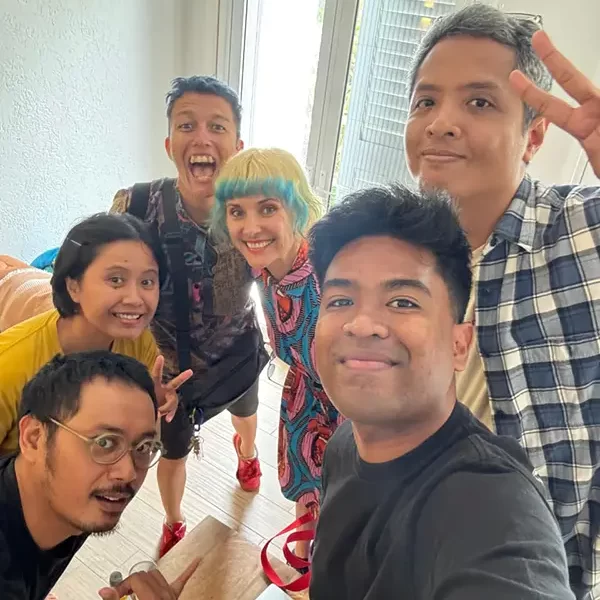
The tropical breeze hit us almost immediately as we stepped out of Cairns International Airport. A few moments later, Melania Jack waved at us before pulling us into a warm hug. Earlier, Jack had joked that there was no way we would miss them in a crowd with their bright green hair. They were absolutely right.
On the drive from the airport, rows of mangrove trees stretched along the coastline. Everything felt strangely familiar and unfamiliar at the same time. Tropical air, coastal weather, warm conversations, somehow it reminded us a little of home, just in a different rhythm.
That was the beginning of our research and development phase II for the Dialog Lensa international collaboration between PSBK and NorthSite. It felt a bit emotional to finally arrive here because in many ways it felt like a full circle moment.
Back in 2025, Ashleigh Campbell came to PSBK for the first Dialog Lensa R&D initiative. At the beginning, the idea was actually very simple: bringing artists from Jogja and Cairns together to see what could happen if they shared space, stories, and ways of working. No grand promises. Just curiosity, trust, and a desire to build connection over time. Since then, the collaboration slowly expanded through Dialog Lensa 1 & 2: Special Screening & Performance in Cairns (2025) and later through Dialog Lensa #6: Sitting with the Sea by Vickram Sombu and The Ironing Maiden in Yogyakarta (2025) and Cairns (2026).
But when we arrived in Cairns, it became clear that the collaboration was never only about presenting artworks. It was more about the exchanges between artists, the negotiations happening behind the scenes, the meaningful conversations with audiences afterward, and all the small moments that often disappear from official documentation.
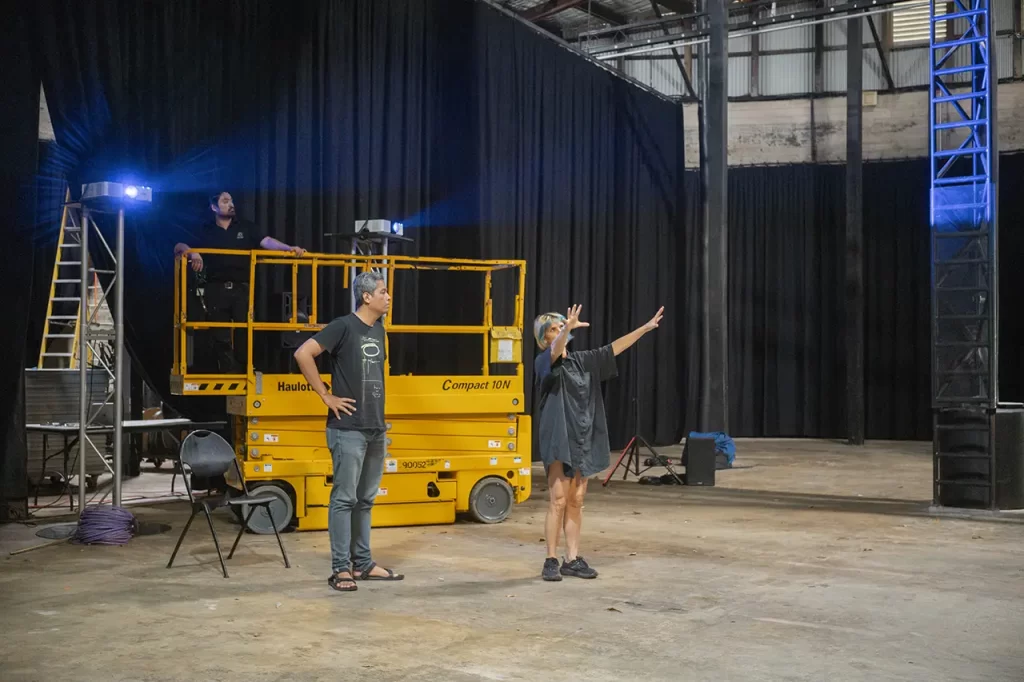
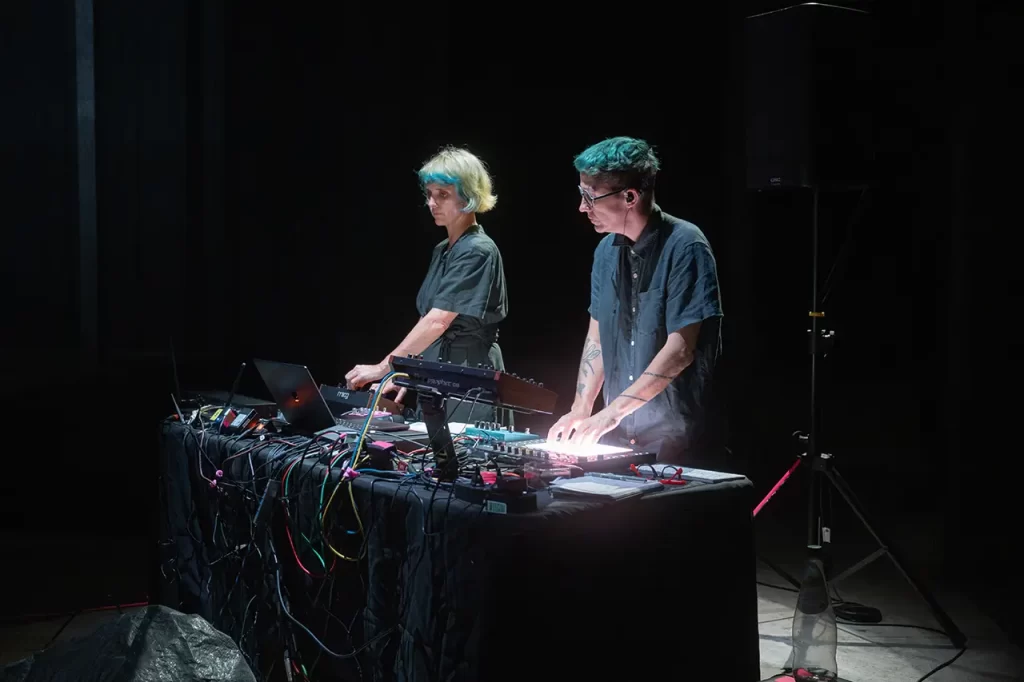
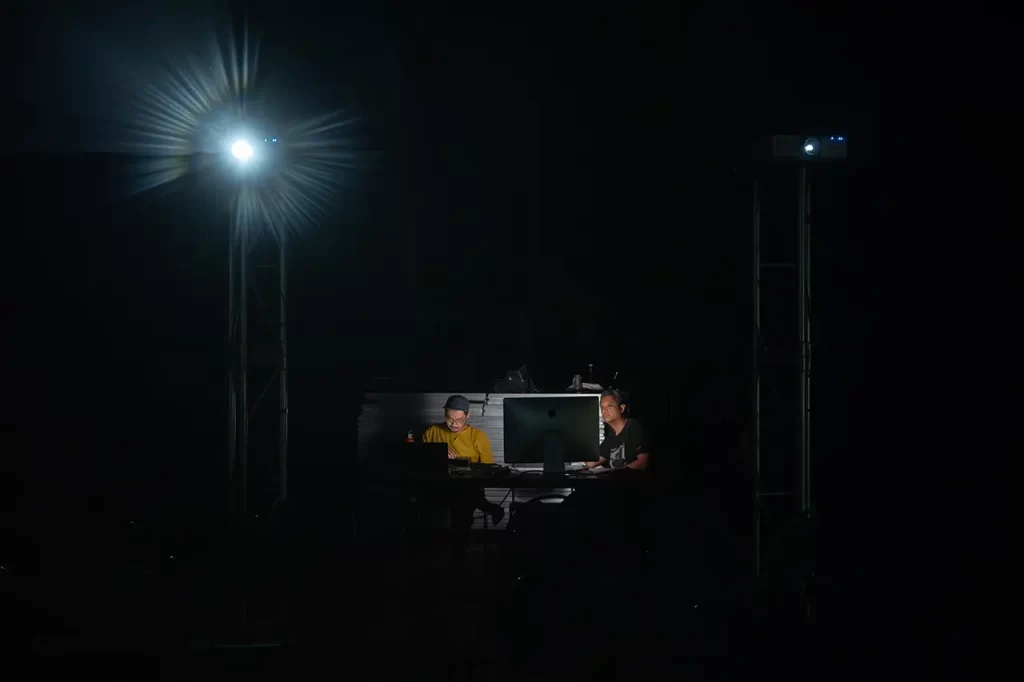
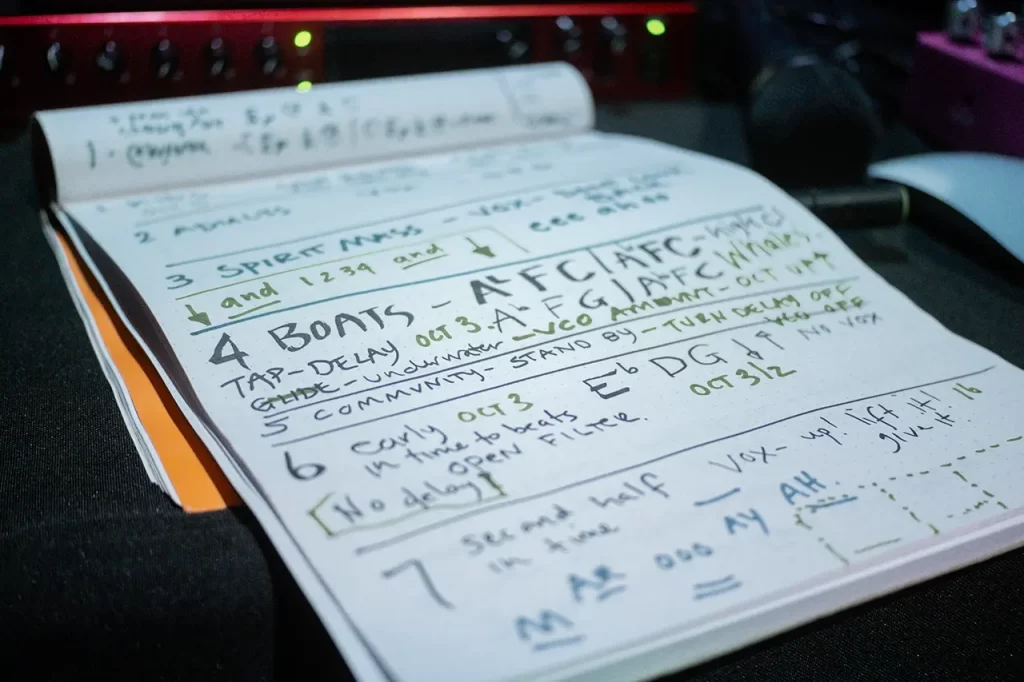
BTS Tanks Documentation, Photographer – Vickram Sombu
Working Across Different Context and Space
Working across different production and cultural contexts is never easy. During the first few days, we watched artists continuously negotiate with technical systems, venue regulations, unfamiliar workflows, and different expectations around production.
In Jogja, a multimedia performance like this could easily involve almost twenty people: technical crew, hospitality teams, production assistants, volunteers, artists moving in and out of the space together. In Cairns, things worked differently. Much smaller team, much leaner setup. At one point, nearly everything technical depended on one dedicated technician (hats off for Sho!), while the artists handled many things themselves.
So there were many “Oh, technologia!” moment, times when the whole team felt completely exhausted, burst into laughter out of frustration, and somehow just kept going.
But maybe that was also where the interesting part of the collaboration lived. Working in a different space meant accepting different limitations. It pushed everyone to rethink their methods, adapt their expectations, and become more aware of how infrastructure, cultural systems, and working environments shape artistic production.
What stood out most was the trust between the collaborators. Instead of trying to control every little detail, both Vickram and Wid, as well as Patty and Jack, gave each other space to breathe and let the process unfold naturally. Adjustments happened gradually during rehearsals, when the visuals, music, editing, and sound slowly found their rhythm together.
Watching them made us realize that meaningful collaboration is often less about perfection and more about learning how to stay open within unfamiliar situations. It means navigating awkwardness, uncertainty, exhaustion, different communication styles, and unexpected limitations.
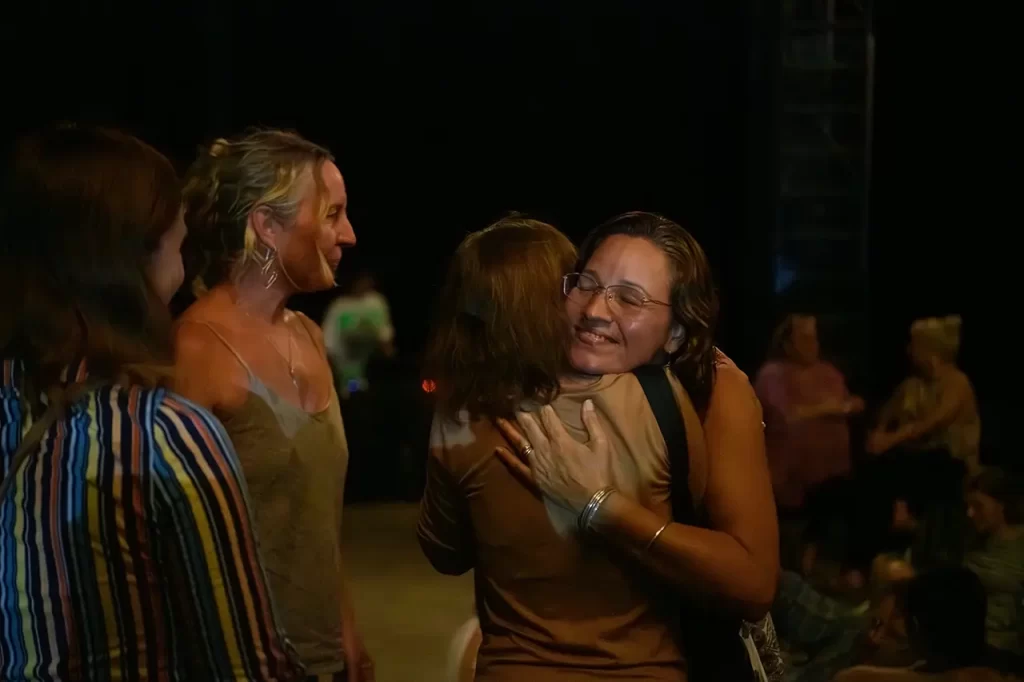
Photos courtesy of NorthSite Contemporary Arts
Photographer- Cristina Bevilacqua
A Space to Sit, Listen, and Engage
Dialog Lensa was originally created as a platform for meaningful cultural connection across borders. Through photography, sound, moving image, music, and live performance, it brings together artists and audiences from different backgrounds into one shared experience.
That feeling became especially present during the Cairns presentation of Sitting with the Sea at Tanks Arts Centre.
As audiences entered the venue, we welcomed them into the space and invited them to simply sit and experience the work. When the lights dimmed and the music slowly filled the room, the performance did more than tell stories about Lamalera and its whale-catching traditions. It invited audiences into a much deeper encounter: with language, memory, community struggle, relationships to the sea, and everyday life in coastal East Indonesia.
And then something unexpected happened. After the performance ended, people stayed.
Instead of immediately leaving the venue, most of the audience members remained seated, wanting to know more about the process behind the collaboration and the stories within the work. Small conversations began forming across the room.
We saw how the performance became a starting point for something larger than the artwork itself. That part honestly surprised us the most.
We invited audiences to do short two-minute interviews after the show, expecting maybe a few polite responses. Instead, people voluntarily approached us asking, “Can I do that two-minute interview too?”
There was something really moving about seeing that kind of openness.
They said:
“I could really feel the connection between the images, nature, the villages, and the ocean. It felt distant, but also deeply familiar.” – Bruce
“Emotionally, I felt transported to another place, another time, and another way of living.” – Jan
“And there was such a strong sense of positivity and warmth in the people represented. It left me feeling hopeful.” – Maya
Listening to those reflections, we realized the performance had created something larger than a presentation. It created a space where people could briefly connect through shared feelings, memories, and curiosity.
Art That Connects Across Borders
And maybe that is what stayed with us most after Cairns. Not only the performance itself, but all the conversations beyond the artistic outcome.
We often found ourselves reflecting on how all of this began back in Jogja in 2025: through small talks with local artists and communities about their practices, struggles, and hopes within art ecosystems. Those conversations slowly became the foundation for everything that followed.
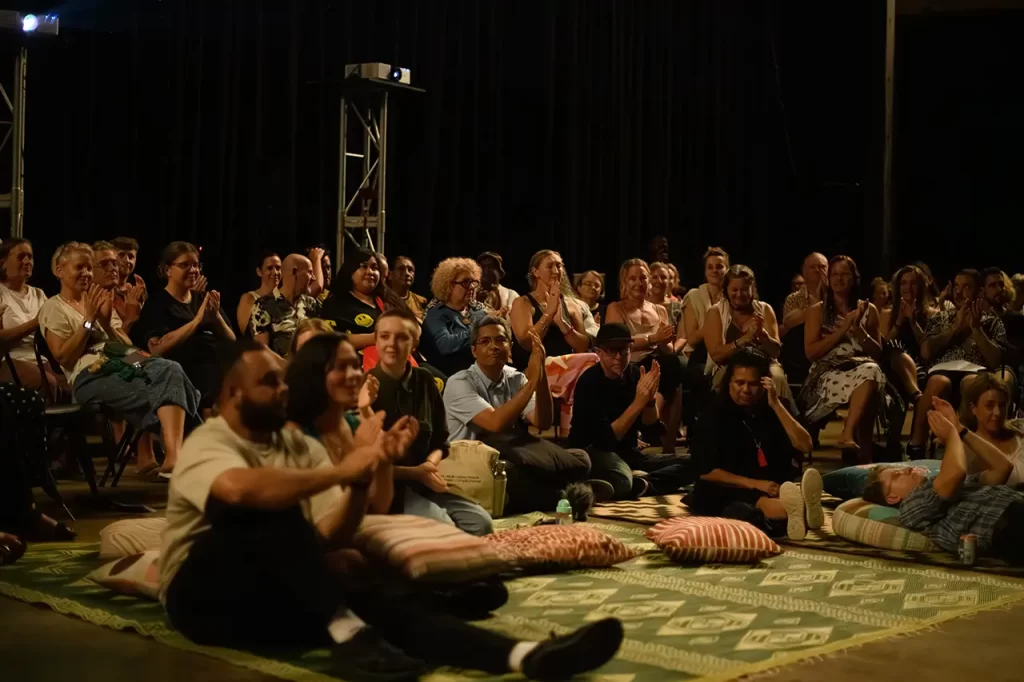
Photos courtesy of NorthSite Contemporary Arts
Photographer- Cristina Bevilacqua
After the performance ended, Adam shared a photo of audiences still sitting quietly and said: “I think this is one of the things that define regional communities. They value the opportunity to connect.”
And maybe he was right. That is what this collaboration has really been about all along. Not only artworks, presentations, or mobility between countries but relationships.
Relationships that continue growing through conversations, shared learning, trust, and collective experiences across the Asia-Pacific region. Or as Vickram once said during our time together in Jogja: “It’s like planting a good seed and watching it slowly bloom.”


Courtesy of PSBK
Dialog Lensa International Collaboration is developed and presented by Padepokan Seni Bagong Kussudiardja (PSBK), Indonesia and NorthSite Contemporary Arts, Australia. The Research and Development process for PSBK – Northsite Partnership Phase II was conducted by PSBK throughout March–May 2026. This project is supported through Regional // Regional, an initiative of Asialink Arts at the University of Melbourne with support from The Yulgibar Foundation, Circle 5 and Konfir Kabo & Monica Lim.